
Portrait and outlooks concerning the rental housing stock of Québec’s housing NPOs
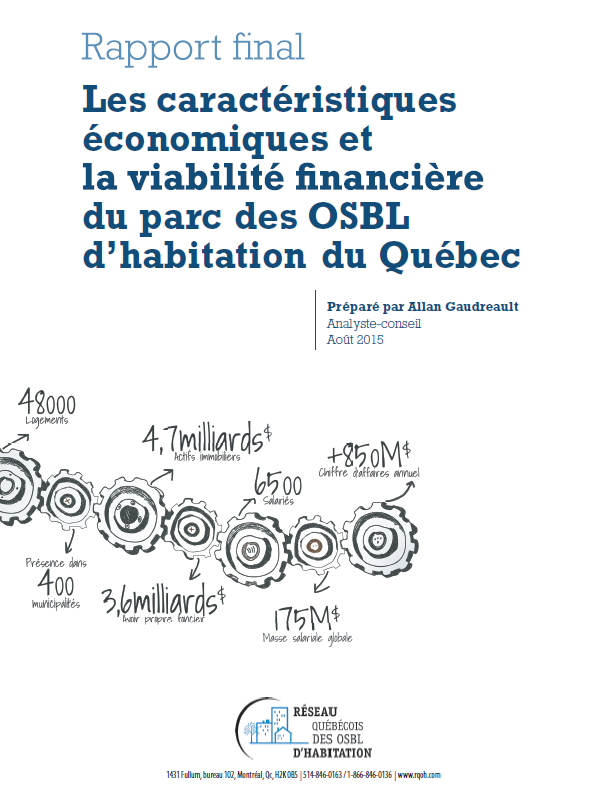
A study report on the economics and financial viability of the rental housing stock of Québec’s housing NPOs was recently published by the Réseau québécois des OSBL d’habitation (RQOH). The study was carried out largely by Allan Gaudreault, a well-known consulting analyst in the field. It aimed at identifying the needs of the NPOs in a context where the impact of the expiry of operating agreements in different public housing programs is felt and where the aging of the housing stock and the limited financial means of some NPOs remain important issues.
The study first identified the general economics and financial characteristics of the inventory of housing NPOs and analyzed the long-term financial viability of these assets. The study then examined the state of their replacement reserve to deal with problems of aging buildings. Subsequently, the study focused on the ability of the NPOs to overcome the challenges put out by the expiry of operating agreements. It also highlighted the role of housing NPOs as economic players.
The study reveals that the housing stock of Québec’s network of housing NPOs will soon reach 50,000 units and that these assets are valued at nearly five billion dollars. This network serves a diverse customer base and more than half of its tenants are receiving some form of assistance. The network has a great potential but must still face important challenges. Indeed, with the expiry of the operating agreements, a significant number of housing NPOs will face a sustainability problem.
In this regard, the study highlights the fact that this heritage is vulnerable and that the Québec network of housing NPOs would gain by developing better tools for planning and management to ensure both the sustainability of its assets and its financial autonomy. In conclusion, Mr. Gaudreault, who did both the data analysis and the drafting of the report, is in favour of increased support towards the resolution of management and sustainability issues for these organizations.
The study report can be consulted on the website of the Réseau québécois des OSBL d’habitation (RQOH).