
The SHDM programs spark the interest of Urban Land Institute
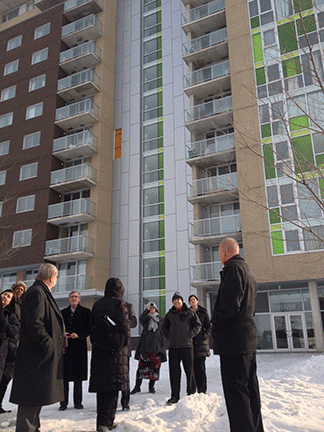
On January 15, the SHDM had the pleasure of hosting a delegation of scholarship recipients from the Daniel Rose Fellowship of the Urban Land Institute (ULI) who were visiting Montreal as part of a study tour. As a key contributor to the search for housing solutions in Montréal, the SHDM was naturally targeted by ULI to help the delegation’s members explore the different innovative approaches that are put forward in the Montréal area.
The ULI is an educational non-profit organization specializing in urban planning, and was founded in 1936. It is supported by its approximately 33,000 members worldwide who are working in the fields of real estate and urban development. In short, the ULI encourages and supports research and development of best policies and practices in land use and offers its expertise and know-how to leaders and municipal authorities responsible for urban planning. As part of the Rose Fellowship program, the organization annually invites representatives of major US cities to participate in a study tour to gather, from other large cities, viable and relevant improvement ideas in the fields of urban planning and real estate development.
Coming from four different US cities, i.e. Boston, Omaha, Pittsburgh and Seattle, and accompanied by some members of ULI, scholarship holders thus took advantage of their stay in Montréal to meet with the Executive Director of the SHDM, Ms. Johanne Goulet, and some members of her team to learn more about SHDM’s activities, and in particular about the Accès Condos program. The team was able to visit three accredited Accès Condos projects including Cité l’Acadie, a mixed project that integrates social housing and condominium units.
Notwithstanding the different political and cultural contexts of their home cities, the twelve members of the delegation were unanimous in their praise of the Accès Condos program as a tool to foster access to home ownership and urban revitalization. The design quality and the affordability of the projects, including the three+ bedroom units for families, delighted in particular the participants from Boston where affordable home ownership and the need to revitalize old industrial sectors remain significant challenges.